Table of Contents
ToggleKitchens don’t always come in generous sizes. Whether you’re outfitting an urban apartment, a basement kitchenette, or a vintage home with narrower floor plans, standard-width refrigerators can turn a tight layout into a constant squeeze. That’s where a 28 inch refrigerator earns its keep, offering full-height cooling without monopolizing precious floor space. Unlike counter-depth units that sacrifice capacity for a flush look, or mini fridges that can’t handle a week’s groceries, a 28 inch wide refrigerator strikes a practical balance between storage and footprint. This guide walks through what sets these models apart, which features matter most, and how to install one without second-guessing your measurements.
Key Takeaways
- A 28 inch refrigerator provides full-height cooling for tight kitchens, offering 10–16 cubic feet of capacity—enough for one to three people—without monopolizing precious floor space.
- The three main configuration options are top-freezer (most affordable and spacious), bottom-freezer (fresh food at eye level, 15–25% more expensive), and French door (rare, premium-priced, ideal for entertaining).
- ENERGY STAR certification saves $35–$50 annually and $350–$500 over 10 years, while inverter compressors reduce energy use and noise better than traditional cycling models.
- Proper installation requires measuring cabinet openings at three points, accounting for 1–2 inches of rear clearance for airflow, and planning door swing to reach 110–120 degrees for full access to crisper drawers and bins.
- Built-in ice makers increase both cost and energy consumption by 12%, so consider manual ice trays if plumbing access is limited or maintenance is a concern.
- Always verify nominal versus actual width on spec sheets, as handles can add 1–2 inches to the advertised 28-inch dimension, and check door swing direction before ordering to avoid workflow disruptions.
What Is a 28 Inch Refrigerator and Who Needs One?
A 28 inch refrigerator refers to the external width of the unit, typically measured from the widest point, which is often the door handles or case edges. Actual cabinet cutout dimensions run slightly smaller, usually around 27 to 27.5 inches, leaving clearance for ventilation and door swing. These models are classified as narrow or apartment-size refrigerators, sitting between compact under-counter units (18–24 inches wide) and standard full-size models (30–36 inches).
They’re built for scenarios where every inch counts. Common use cases include:
- Older homes with galley kitchens where cabinet runs were framed for narrower appliances.
- In-law suites, ADUs, or basement apartments that need full-height refrigeration without eating up walkways.
- Studio or efficiency layouts where the kitchen occupies a single wall.
- Second kitchens or wet bars in rec rooms, guest houses, or poolside spaces.
A 28 wide refrigerator won’t match the cubic-foot capacity of a 36-inch French door model, but it delivers enough room for a household of one to three people or serves as overflow storage for entertaining. Most units land between 10 and 16 cubic feet of total capacity, split between fresh food and freezer compartments.
One key distinction: nominal versus actual width. Just as a 2×4 stud measures 1.5 by 3.5 inches, advertised refrigerator dimensions aren’t always exact. Always verify the spec sheet for cabinet opening requirements and door clearance. Some models list 28 inches as the case width, while others include handles in that figure, which can add another inch or two.
Key Features to Look for in a 28 Inch Refrigerator
Storage Capacity and Interior Layout
Capacity matters less than usable shelf configuration in a narrow fridge. Look for adjustable glass shelves that slide or fold to accommodate taller items like pitchers or cake stands. Spill-proof edges are a practical upgrade, they contain leaks and make cleanup easier.
Door bins should be deep enough for gallon jugs without blocking interior shelves. Some manufacturers skimp on door storage in narrower models, forcing you to juggle condiments and beverages on main shelves. Check the number and depth of door pockets before buying.
Crisper drawers in a 28 inch wide refrigerator often run the full width of the unit, which is a plus for produce storage. Humidity controls, simple sliders that adjust ventilation, help extend the life of greens and berries. If the model includes a deli drawer, it’s usually shallow but useful for cheese, lunch meat, or snacks.
Freezer compartments come in three styles:
- Top-mount freezers (traditional two-door layout) offer the most freezer space, usually 4 to 6 cubic feet, and tend to cost less.
- Bottom-mount freezers put fresh food at eye level, reducing the need to bend for everyday items. Freezer access is via a pull-out drawer or swing door.
- French door models pair double doors on top with a bottom freezer drawer. They’re less common in 28-inch widths but provide wide shelf spans without a center divider.
If you rely on frozen bulk items or ice production, prioritize freezer volume. For households that mostly use fresh ingredients, a larger fresh-food section makes more sense.
Energy Efficiency and Operating Costs
ENERGY STAR certification is the baseline for efficient operation. Certified models use at least 10% less energy than the federal minimum standard, which translates to roughly $35 to $50 in annual savings depending on local utility rates. Over a 10-year lifespan, that’s $350 to $500, enough to justify a slightly higher upfront cost.
Compressor type affects both efficiency and noise. Inverter compressors modulate cooling output instead of cycling on and off, which reduces energy spikes and temperature fluctuations. They also run quieter, an important consideration if the refrigerator sits near a living area or bedroom.
LED lighting is standard in most newer models. It uses a fraction of the energy of incandescent bulbs and generates less heat, which reduces the compressor’s workload. Look for lights positioned in multiple zones (top, rear, and side walls) to eliminate dark corners.
A 28 inch wide refrigerator with ice maker adds convenience but increases both purchase price and energy draw. Built-in ice makers consume about 12% more electricity than models without them and require a water line connection. If plumbing access is limited or you’d rather avoid the maintenance of cleaning ice maker components, a manual ice tray setup keeps things simpler and more efficient.
Top Configuration Options: Which Style Works Best?
Top-freezer models remain the most affordable and straightforward option. They’ve been the standard layout for decades, which means parts and service are widely available. The freezer’s elevated position means less bending for items you grab frequently, but it also puts fresh produce and beverages at knee level.
These units typically offer the highest total capacity in a 28-inch footprint, often 14 to 16 cubic feet, and use less energy than bottom-mount or French door designs because the compressor doesn’t have to work as hard to cool the elevated freezer. If budget and storage volume are top priorities, this configuration delivers.
Bottom-freezer refrigerators flip the script, placing the fresh-food compartment at eye level. This layout suits households that access the fridge more than the freezer and prefer not to stoop for milk or leftovers. The freezer drawer slides out on tracks, making it easier to see contents than rummaging through stacked shelves.
One trade-off: bottom-mount models tend to cost 15 to 25% more than comparable top-freezer units. They also lose a bit of total capacity because the freezer drawer mechanism takes up space. Expect around 12 to 14 cubic feet in most 28-inch bottom-mount designs.
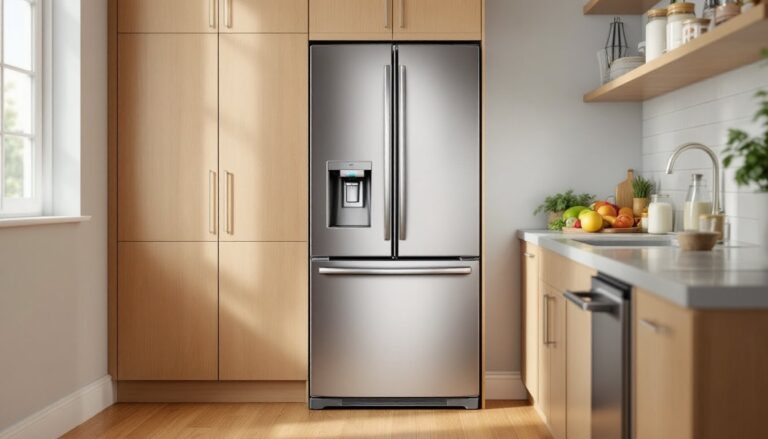
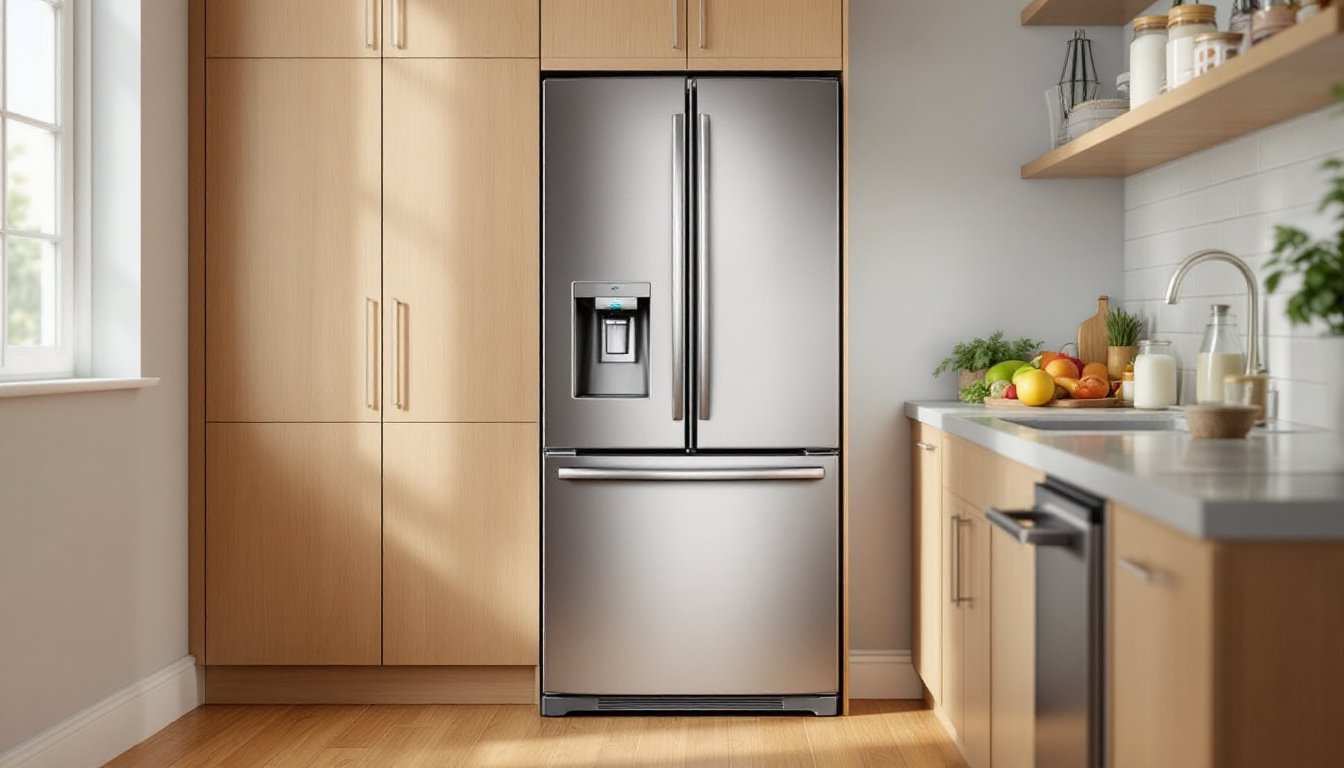
French door refrigerators in the 28-inch class are rare but worth considering if you prioritize fresh-food access and wide shelf spans. The double-door layout eliminates a center mullion, so you can slide in large platters or pizza boxes without tilting. The bottom freezer drawer matches the convenience of a bottom-mount model.
French door units are the priciest of the three styles and often include premium features like digital temperature controls, door alarms, and advanced humidity management. They’re a good fit for compact kitchens that still handle regular meal prep or entertaining, but they’re overkill if you’re just looking for basic cold storage.
According to experts in narrow kitchen layouts, the Haier 28-inch French door model stands out among skinny refrigerators for balancing capacity and style.
Installation Tips and Space Planning for 28 Inch Models
Measure the cabinet opening at three points: top, middle, and bottom. Older homes often have out-of-plumb walls, and a quarter-inch variance can mean the difference between a clean fit and a forced installation that damages door hinges or trim.
Account for these clearances:
- Top clearance: Most manufacturers specify 1 inch minimum for ventilation. If the fridge sits under a cabinet, verify that measurement from the countertop.
- Rear clearance: Coil condensers need 1 to 2 inches behind the unit for airflow. If the model uses a rear-mounted compressor, allow extra room for service access.
- Side clearance: Budget 0.25 to 0.5 inches on each side unless the unit is designed for zero-clearance installation.
Door swing is critical. A 28 inch refrigerator installed flush with the counter edge may have doors that open only 90 degrees before hitting adjacent cabinets or islands. Full access to crisper drawers and door bins often requires 110 to 120 degrees of swing. Test the arc with a cardboard template before finalizing placement.
If the fridge includes an ice maker, you’ll need a cold water supply line. Most codes require a shutoff valve within 6 feet of the appliance. Copper or braided stainless steel lines work: avoid plastic tubing in areas where it might kink or get pinched. If you’re not comfortable soldering or working with compression fittings, hire a licensed plumber, improperly installed water lines can cause leaks that damage flooring and cabinetry.
Electrical requirements are usually straightforward: a dedicated 15-amp circuit with a grounded three-prong outlet. Avoid extension cords or power strips, which can overheat and void the warranty. The outlet should be positioned on the adjacent wall or floor, not directly behind the unit where the plug might interfere with rear clearance.
For uneven floors, most refrigerators include adjustable leveling legs. Use a 4-foot level across the top of the unit, checking front-to-back and side-to-side. A slight backward tilt (about 0.25 inches over the depth of the fridge) helps doors close on their own and prevents sagging over time.
If you’re replacing an older model, match the door swing direction to your existing layout unless you’re willing to relocate handles or reroute workflows. Some manufacturers offer reversible door hinges: others require ordering a left- or right-swing unit at purchase. Check the spec sheet before ordering.
When it comes to practical kitchen organization strategies, planning around the refrigerator’s footprint ensures efficient workflow and avoids bottlenecks. For detailed appliance reviews and safety guidance, consult testing labs that evaluate performance under real-world conditions.
Safety note: Always unplug the unit and shut off the water supply before making any adjustments or repairs. Refrigerant lines are pressurized, never puncture or attempt to service them without EPA-certified training.
Conclusion
A 28 inch refrigerator solves the narrow-kitchen puzzle without forcing compromises on storage or functionality. Measure carefully, prioritize features that match your household’s routine, and don’t skip the clearance checks during installation. When space is tight, the right compact model makes every inch count.