Table of Contents
ToggleCommercial kitchens don’t tolerate weak equipment. They run industrial-duty machines built to handle hundreds of cycles without flinching, and Hobart sits at the top of that food chain. For over a century, Hobart has been the go-to brand in restaurants, hospitals, and universities where downtime equals lost revenue. Now, some homeowners with serious cleaning demands are bringing these workhorses into residential spaces. But a Hobart dishwasher isn’t a typical under-counter appliance you pick up on sale at the big-box store. It’s a purpose-built cleaning system designed for speed, durability, and performance that outlasts anything in the consumer aisle.
Key Takeaways
- A Hobart dishwasher completes full wash and rinse cycles in 60–90 seconds using high-temperature water (up to 180°F) and commercial-grade components, compared to 90–120 minutes for residential models.
- Hobart dishwashers feature stainless steel construction and are engineered to handle 50+ cycles daily, delivering 15–20 years of durability versus 7–10 years for consumer dishwashers.
- A Hobart dishwasher is ideal for high-volume entertaining, home-based food businesses, or large families running 3+ loads daily, but requires dedicated electrical circuits (208V–240V), upsized plumbing, and total installation costs of $5,100–$11,200.
- Operating costs for a Hobart dishwasher include $30–$60 monthly for electricity and $50–$100 for commercial detergent, plus ongoing maintenance, making long-term value dependent on heavy usage justifying the premium.
- Most households with typical dishwashing needs (1–2 loads daily) benefit more from Energy Star-rated residential models, as a Hobart’s noise level (60–70 dB), complexity, and higher operating costs outweigh efficiency gains.
- Installation of a Hobart dishwasher requires licensed electrician work, upsized water supply lines (3/4-inch), larger drains, and possible water softening systems, plus verification of local building codes and permits for commercial kitchen equipment in residential spaces.
What Is a Hobart Dishwasher and Why Is It Different?
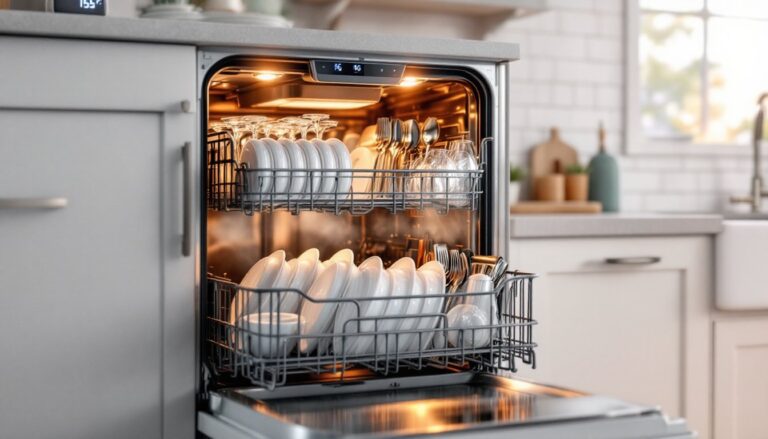
Hobart manufactures commercial dishwashers engineered for high-volume, high-temperature sanitation. Unlike residential models that prioritize quiet operation and energy ratings, Hobart machines focus on cycle speed, water temperature, and durability.
A standard home dishwasher runs cycles lasting 90 minutes to two hours. A Hobart commercial dishwasher completes a full wash and rinse in 60 to 90 seconds. That’s not a typo. These units use higher water pressure, hotter water (up to 180°F final rinse for sanitization), and heavy-duty pumps to blast away grease and food debris in a fraction of the time.
The construction is also fundamentally different. Hobart dishwashers feature stainless steel tanks, heavy-gauge doors, and commercial-grade motors rated for thousands of cycles. Consumer dishwashers use plastic tubs and lighter components designed for maybe 8–10 cycles per week. A Hobart can handle 50+ cycles daily without breaking a sweat.
These machines aren’t built for the average household. They’re designed for operations where sanitation codes matter, where downtime costs money, and where equipment failure isn’t an option. That ruggedness comes with trade-offs: higher upfront cost, louder operation, and installation requirements that go beyond plugging into a standard outlet.
Key Features That Set Hobart Dishwashers Apart
Speed and Cycle Time
Hobart’s fastest models finish a complete cycle in 60 seconds. Even slower units clock in under two minutes. This speed relies on powerful spray arms, high-temperature water, and booster heaters that maintain consistent heat throughout the cycle. For anyone hosting large gatherings or running a home-based catering operation, this eliminates the bottleneck of waiting hours for clean dishes.
High-Temperature Sanitization
Most Hobart dishwashers include a 180°F final rinse achieved through built-in booster heaters. This isn’t just about getting dishes clean, it meets NSF/ANSI Standard 3 for commercial sanitation, killing bacteria and viruses that survive lower-temperature washes. Homes with immunocompromised residents or those handling raw meat regularly benefit from this level of sanitization.
Stainless Steel Construction
Every surface that touches water is Type 304 stainless steel. The wash tank, door, spray arms, and pump housing resist corrosion, mineral buildup, and cracking far better than polymer components. This material choice extends machine life to 15–20 years with proper maintenance, compared to 7–10 years for consumer models.
Adjustable Rack Systems
Unlike fixed residential racks, Hobart dishwashers use removable peg racks designed for different dish types. Flat racks handle plates, peg racks secure glassware, and open racks accommodate oversized pots. This modularity suits varied washing needs but requires more manual setup between cycles.
Chemical Dispensing Systems
Many Hobart models integrate automatic detergent and rinse-aid dispensing. These systems use commercial dishwashing chemicals, not the pods or gel you buy at the grocery store. The dispensers meter precise amounts per cycle, which improves results and reduces waste. But, many homeowners find smart appliances easier to operate than managing chemical concentrations.
Is a Hobart Dishwasher Right for Your Home?
Most homeowners don’t need a Hobart. Be honest about your usage before dropping several thousand dollars on commercial equipment.
When It Makes Sense
High-volume entertaining: If you regularly host events for 20+ people, a Hobart eliminates the multi-hour cleanup backlog. Running 10 cycles in 20 minutes beats waiting all evening for a residential unit to finish.
Home-based food businesses: Caterers, bakers, or anyone preparing food for sale often face health department inspections. A commercial dishwasher with high-temp sanitization helps meet local codes and demonstrates professional standards.
Large families with heavy use: Households running their dishwasher 3+ times daily might justify the durability and speed. The machine pays for itself in time savings and reduced appliance replacement over 15–20 years.
When to Stick with Residential
Typical household use (1-2 loads per day): Consumer dishwashers handle this volume fine. The noise, installation complexity, and cost of a Hobart outweigh the benefits.
Limited electrical capacity: Hobart dishwashers require dedicated 208V or 240V circuits with 30-50 amp service. Older homes without panel capacity for another heavy appliance will need electrical upgrades costing $500–$2,000.
Noise sensitivity: Commercial units run at 60-70 dB, similar to a vacuum cleaner. They’re louder than residential models rated for 40-50 dB. Open-plan kitchens near living spaces make this noise intrusive.
Water and energy costs: Hobart machines use 0.7-1.1 gallons per cycle, which sounds efficient, but the water is heated to much higher temperatures. Electric booster heaters draw significant power. Depending on local utility rates, operating costs can exceed residential models even though lower water volume.
According to appliance testing standards, most households benefit more from Energy Star-rated residential models unless specific commercial needs justify the upgrade.
Hobart Dishwasher Models: Choosing the Best Option
Hobart doesn’t sell through typical appliance retailers. You’ll order through foodservice equipment dealers or specialized commercial kitchen suppliers. Here’s a breakdown of common types:
Undercounter Models
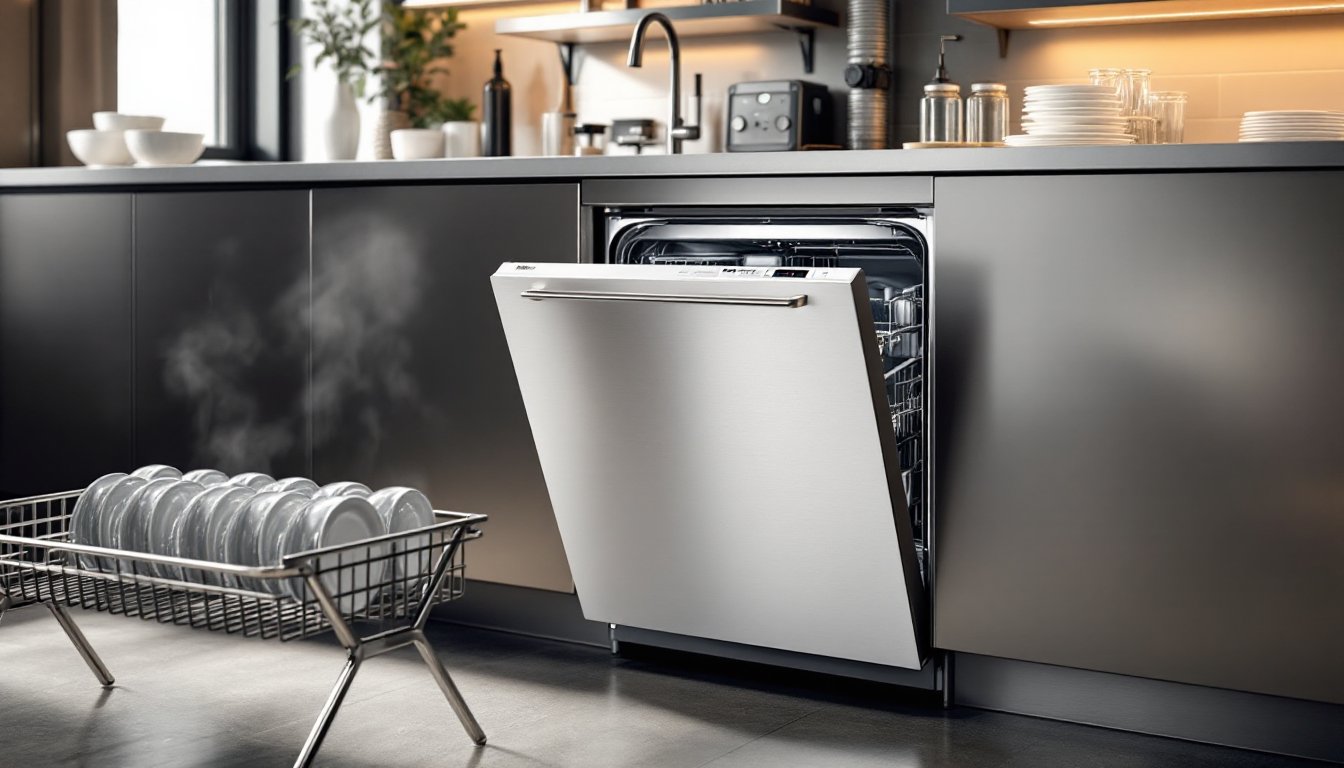
These are the most residential-friendly option. They fit under standard 34-36 inch countertops and connect to existing plumbing (with modifications). The Hobart LXeR series is popular for home installations, offering 60-90 second cycles and built-in booster heaters.
Dimensions: Typically 24 inches wide, 24-26 inches deep, and 33-34 inches tall. They weigh 150-200 pounds.
Capacity: Handle 24-30 dish racks per hour (about 20-30 place settings), far exceeding residential models that manage 12-16 place settings per 2-hour cycle.
Door-Type (Pass-Through) Dishwashers
These sit at counter height with doors that lift or slide. Dirty racks load from one side, clean racks exit the other. They’re common in restaurant dish pits but impractical for most homes unless you’re building a dedicated dishwashing station.
Space requirements: 24-30 inches wide, 30-36 inches deep, 60-72 inches tall. They need clearance on both sides for loading and unloading.
Conveyor Dishwashers
Used in institutional kitchens, these are overkill for any residential application. They process hundreds of racks per hour and require dedicated mechanical rooms for pumps and heaters.
New vs. Refurbished
New Hobart undercounter units run $4,000-$8,000 depending on features. Refurbished models from equipment dealers cost $2,000-$4,000 but may have limited warranties. Used commercial equipment carries risk, previous owners may have run units hard without maintenance. Always request service records and inspect pumps, heating elements, and door seals before purchase.
Installation and Maintenance Tips for Hobart Dishwashers
Electrical Requirements
Most Hobart dishwashers need 208V or 240V single-phase power with a dedicated circuit. Check the machine’s data plate for exact amperage, typically 30-50 amps. This is not a plug-and-play installation. You’ll need a licensed electrician to run new wiring from your main panel and install the appropriate receptacle (usually NEMA 6-50R or similar).
Don’t attempt this yourself unless you’re a qualified electrician. Incorrect wiring creates fire hazards and voids equipment warranties. Expect electrical work to cost $300-$800 depending on distance from the panel and local labor rates.
Plumbing Connections
Hobart machines require 3/4-inch hot water supply lines capable of delivering 20+ GPM at 120-140°F. Standard residential dishwasher hookups use 3/8-inch lines, so you’ll need to upsize. The drain connection is typically 1-inch or 1.5-inch, larger than the standard 3/4-inch residential drain.
Install a backflow preventer on the water supply line to meet plumbing codes. Some jurisdictions require an air gap on the drain as well. Check local codes before roughing in plumbing.
If your water heater struggles to maintain temperature under high draw, consider a point-of-use tankless water heater near the dishwasher. This ensures consistent inlet temperature without depleting your main tank during long wash sessions.
Chemical Setup
Hobart dishwashers use commercial detergent and rinse aid, not consumer products. These chemicals come in concentrated liquid or solid form and dispense automatically through built-in pumps.
Set up dispensers according to the manufacturer’s instructions, adjusting concentration based on water hardness. Most areas require water softening for commercial dishwashers to prevent mineral buildup on heating elements and spray arms.
Routine Maintenance
Daily tasks include:
- Cleaning the scrap tray after every shift to prevent clogs
- Wiping door gaskets to ensure proper sealing
- Checking spray arm rotation for blockages
Weekly maintenance:
- Deliming the wash tank if you have hard water (use commercial deliming solution, not vinegar)
- Inspecting pump filters and clearing debris
Monthly tasks:
- Descaling the booster heater if mineral deposits reduce temperature
- Testing water temperature with a thermometer to confirm sanitization levels
Hobart machines are repairable, not disposable. Parts availability is excellent, and most commercial kitchen equipment techs can service them. Budget $200-$400 annually for professional preventive maintenance.
For kitchen efficiency tips, integrating commercial-grade equipment into residential layouts requires careful planning around workflow and accessibility.
Cost Considerations: Investment vs. Long-Term Value
Upfront Costs
- Machine: $4,000-$8,000 new, $2,000-$4,000 refurbished
- Electrical work: $300-$800 for dedicated circuit installation
- Plumbing modifications: $200-$600 for upsized supply lines and drain connections
- Water treatment: $500-$1,500 for softener if needed (depends on existing setup)
- Chemicals and dispensers: $100-$300 initial setup
Total initial investment: $5,100-$11,200 for a complete installation.
That’s 3-5 times the cost of a high-end residential dishwasher. The financial case only works if you value speed, durability, and sanitization enough to justify the premium.
Operating Costs
Electricity for booster heaters and pumps runs $30-$60 monthly for heavy users (10+ cycles daily). Water and sewer costs are minimal due to low gallons per cycle, but heating that water to 180°F consumes energy.
Commercial detergent costs $50-$100 per month depending on usage and chemical brand. This is higher than residential detergent but compensates with better cleaning and automatic dispensing.
Long-Term Value
A Hobart dishwasher lasts 15-20 years with proper maintenance. Compare that to residential models averaging 7-10 years. Over two decades, you’d replace a consumer dishwasher 2-3 times at $800-$1,500 each.
If time savings matter, running 10 cycles in 20 minutes versus 10-20 hours with a residential unit, the productivity gain has real value for busy households or home businesses.
Resale value is tricky. Commercial equipment doesn’t appeal to typical homebuyers. If you sell the house, expect to remove the Hobart and reinstall a standard dishwasher, or accept that it won’t add value to the sale price.
Permit and Code Compliance
Some jurisdictions classify commercial kitchen equipment in residential spaces as a change of use, requiring permits and inspections. Check with your local building department before installation. Operating a home-based food business also triggers health department regulations where commercial dishwashers become mandatory, not optional.
If you’re already navigating those requirements, the Hobart installation aligns with compliance rather than adding complexity.
Conclusion
A Hobart dishwasher isn’t a casual upgrade. It’s a commercial tool transplanted into a residential setting, bringing industrial speed and durability at the cost of complexity and expense. For the right user, someone running high-volume events, operating a home food business, or simply demanding the best cleaning performance available, it’s an investment that pays off in time savings and machine longevity. For everyone else, the noise, electrical requirements, and upfront cost outweigh the benefits. Be brutally honest about your needs before committing to commercial equipment designed for an entirely different environment.