
Table of Contents
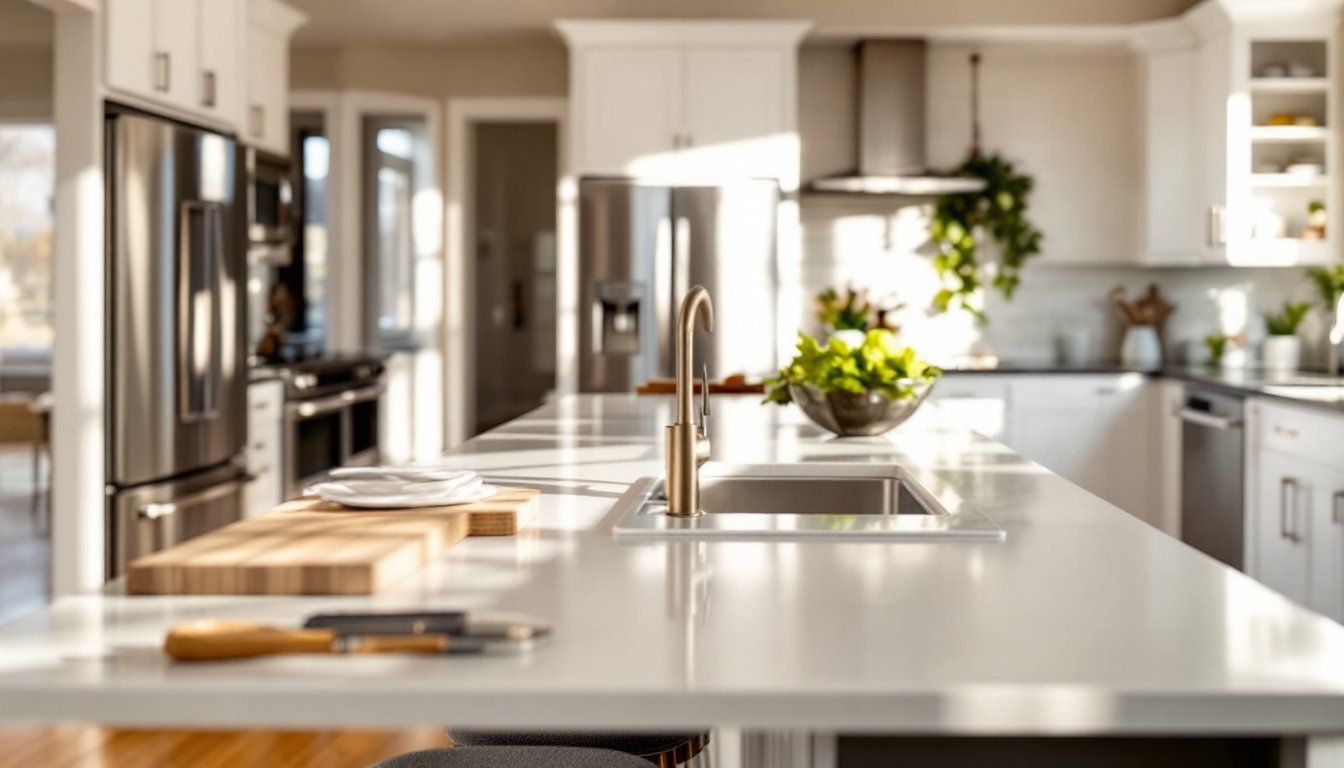
ToggleA kitchen island with a sink isn’t just a luxury, it’s a functional centerpiece that transforms workflow and adds serious value. Whether prepping meals, cleaning up, or entertaining guests, the second water source reduces traffic jams around the primary sink and creates a dedicated zone for tasks. But adding plumbing to a freestanding island involves more than dropping in a basin. It requires careful planning around drain lines, venting, electrical hookups, and local code compliance. This guide walks through the why, the how, and the what-it-costs to help homeowners decide if an island sink is the right move for their kitchen.
Key Takeaways
- A kitchen island with a sink improves workflow by allowing multiple people to work simultaneously and creates a second water source that reduces congestion around the main sink.
- Proper plumbing design requires a minimum 4-foot island length for a single-bowl sink, at least 42–48 inches of clearance from perimeter cabinets, and 9 inches of setback from the island edge to prevent water splash.
- Island sink plumbing involves drain lines with 1/4-inch-per-foot slope, venting (typically an air admittance valve), and supply lines that must meet local code—slab foundations add significant complexity and cost.
- Expect total installation costs between $1,500–$4,000 for materials and labor, with plumbing rough-in and electrical work representing the largest expenses; always obtain permits to avoid issues during resale or insurance claims.
- Popular sink styles for islands include undermount sinks for seamless integration, farmhouse sinks for visual impact, and prep sinks for tight spaces, each with distinct installation requirements and design benefits.
- Avoid common pitfalls like undersizing the island, ignoring vent code requirements, skipping permits, and failing to plan for future access to shutoffs and P-traps inside the cabinet.
Why Add a Sink to Your Kitchen Island?
An island sink does more than look good. It fundamentally changes how a kitchen operates.
Workflow efficiency jumps when multiple people can work simultaneously without crowding the main counter. One person preps vegetables at the island sink while another loads the dishwasher at the perimeter, no bottlenecks, no elbow bumping. In open-concept layouts, the island sink also keeps the cook facing guests or family instead of staring at a backsplash.
Resale value gets a boost, too. Buyers consistently rank kitchen islands as a top-tier feature, and adding a functional sink elevates it beyond a glorified table. Appraisers note the added utility, especially in homes over 2,000 square feet where a second prep zone is expected.
There’s also the entertainment angle. Rinsing cocktail glasses, washing fruit, or filling a pitcher without walking away from guests makes hosting smoother. The island becomes a natural gathering point rather than a boundary.
But it’s not all upside. Island sinks require accessible plumbing, which means cutting into the floor, possibly relocating existing drain lines, and ensuring proper venting per the International Plumbing Code (IPC). If the home is on a slab foundation or has a basement with limited headroom, the installation complexity, and cost, climbs fast.
Planning Your Kitchen Island With Sink
Size and Layout Considerations
The island needs enough real estate to house the sink without sacrificing workspace. A minimum island length of 4 feet is recommended for a standard single-bowl undermount sink, leaving at least 18 inches of counter on either side for prep work. For double-bowl or farmhouse sinks, bump that to 5 feet or longer.
Depth matters, too. A standard island is 24 inches deep (matching base cabinet depth), but many homeowners opt for 30 to 36 inches to accommodate seating on one side and plumbing on the other. If the island includes a dishwasher or garbage disposal, add another 24 inches of width per appliance.
Clearance zones are governed by ergonomics and code. Leave at least 42 inches between the island and perimeter cabinets for single-cook kitchens, or 48 inches if two people regularly work simultaneously. The sink should sit at least 9 inches from the edge of the island to prevent water splash onto the floor and allow room for faucet installation.
Consider seating placement. If bar stools tuck under one side, the sink typically goes on the opposite side or centered, with at least 24 inches of knee space per seat. Don’t put the sink directly in front of a seated guest unless you enjoy splashing them while rinsing greens.
Plumbing and Electrical Requirements
This is where DIY confidence often meets reality. Running plumbing to an island involves drain lines, supply lines, and venting, all of which must meet local code.
Drain lines are the trickiest. The drain needs a minimum slope of 1/4 inch per foot to prevent clogs, and it must connect to the main stack. In a home with a crawl space or basement, the plumber can usually run lines beneath the floor. Slab foundations require cutting through concrete and trenching, which is messy, expensive, and often needs a permit and inspection.
Venting prevents sewer gases from backing up and ensures proper drainage. Standard practice is an air admittance valve (AAV) installed inside the island cabinet, which allows air in without a traditional vent pipe running through the roof. Some jurisdictions don’t allow AAVs, requiring a loop vent or island vent configuration that ties into the main vent stack. Check local code before ordering materials.
Supply lines, hot and cold water, are simpler. PEX tubing is the go-to for flexibility and ease of installation. Run lines from the nearest shutoff (often under the main sink) to the island, securing them to floor joists with plastic clips. Protect lines in the floor cavity with nail plates to prevent accidental punctures during future work.
If adding a garbage disposal or dishwasher, electrical comes into play. A disposal needs a dedicated 15-amp circuit, typically wired through the island cabinet with a switched outlet above the counter or under the sink. A dishwasher requires a 15- or um 20-amp circuit and a direct connection or plug-in setup, depending on code. This is a job for a licensed electrician unless the homeowner is comfortable working inside the panel and pulling permits.
Permits are almost always required for plumbing and electrical work that involves new circuits or drain lines. Skipping the permit might save a few hundred dollars upfront but can haunt a homeowner during resale or insurance claims. Most jurisdictions require rough-in inspections before closing up walls or floors.
Design Ideas and Styles for Island Sinks
Sink style sets the tone for the entire island.
Undermount sinks are the most popular choice for islands. The rim mounts below the countertop, creating a seamless look and making it easy to wipe crumbs directly into the sink. They pair well with quartz, granite, or solid-surface countertops. Installation requires a fabricator to cut the hole precisely and seal the edges with silicone.
Farmhouse (apron-front) sinks make a statement. The exposed front panel adds character, especially in traditional or modern farmhouse kitchens. Installation is more involved because the cabinet needs a modified face frame to support the weight, typically 30 to 60 pounds when empty, much more when filled. Many kitchen design enthusiasts favor this style for its visual impact and deep basin.
Top-mount (drop-in) sinks are the easiest to install. The sink lip rests on the counter, and clips underneath hold it in place. They’re budget-friendly and DIY-friendly but can look dated and trap grime around the rim. Best used with laminate or tile countertops where undermount isn’t an option.
Prep sinks are smaller, usually 15 to 18 inches, and ideal for islands where counter space is tight. They’re perfect for rinsing vegetables, filling pots, or washing hands but won’t handle full dish duty. Pair one with a standard perimeter sink for balanced functionality.
Material choice affects durability and aesthetics. Stainless steel is durable, heat-resistant, and comes in various gauges (18-gauge is sturdier than 22-gauge). Fireclay and cast iron offer color options and a smooth, glossy finish but chip if hit hard. Composite granite resists scratches and stains and muffles sound better than stainless.
Faucet placement depends on whether the island backs to a wall or sits in open space. Deck-mounted faucets are standard, but if the island is floating, consider a pull-down or pull-out sprayer with a high arc to accommodate large pots. Wall-mounted faucets look sleek but require plumbing inside the wall, not viable for most islands unless there’s a pony wall or backsplash behind the sink.
Installation Tips and Cost Breakdown
DIY vs. hiring out: Installing the sink itself is manageable for an experienced DIYer. Cutting the countertop hole (if not done by a fabricator), mounting the sink, and hooking up the faucet take basic tools, a jigsaw for laminate, a drill, and a basin wrench. But running plumbing and electrical? That’s where most homeowners call in pros. Incorrectly pitched drain lines or faulty wiring creates headaches down the road.
Here’s a realistic cost breakdown (prices vary by region and material grade):
- Sink: $150–$800 depending on material and size. A basic stainless undermount runs $150–$300. Fireclay farmhouse sinks start around $400 and climb past $1,000.
- Faucet: $100–$500. Mid-range pull-down models with solid brass construction sit around $200–$350.
- Plumbing rough-in: $500–$1,500 if a plumber runs new drain and supply lines. Add $300–$600 for an AAV or island vent installation. Slab cutting can push this to $2,000+.
- Electrical: $200–$500 for a new circuit and outlet, assuming the panel is nearby and has capacity.
- Countertop modification: $100–$300 if a fabricator cuts the sink hole in stone or solid surface.
- Permits: $50–$200 depending on jurisdiction.
Total project cost: Expect $1,500–$4,000 for a complete island sink installation, including materials and labor. High-end finishes, complicated plumbing routes, or structural modifications can double that.
Installation tips:
- Dry-fit everything before final assembly. Test the sink position, check faucet clearance, and confirm drain alignment.
- Use a cardboard template for the sink cutout. Most sinks come with one: trace it carefully and double-check measurements.
- Support the sink cutout from below when cutting to prevent the countertop from cracking or the cutout from dropping and chipping the edge.
- Apply a bead of silicone around the undermount rim before clamping. This seals against water infiltration.
- Install shutoff valves on both hot and cold supply lines inside the cabinet for easy future maintenance.
- Test for leaks thoroughly. Run water for several minutes and check all connections, drain tailpiece, P-trap, supply lines, and faucet base.
Garbage disposal considerations: If adding one, confirm the island cabinet has at least 18 inches of height below the sink for clearance. Wire it to a switched outlet and use a continuous-feed model for safety. Disposals add weight, reinforce the sink mounting if needed, especially with an undermount installation.
Common mistakes to avoid:
- Undersizing the island. Cramming a sink into a 3-foot island leaves no usable counter space.
- Ignoring vent code. An improperly vented drain will gurgle, drain slowly, and eventually back up.
- Skipping the permit. Inspectors can require rework or even removal of unpermitted plumbing.
- Forgetting about access. Leave room inside the cabinet to reach shutoffs and the P-trap for future repairs.
Adding features like a curated prep zone or integrating the island sink into a larger remodel can elevate both function and style, especially when thoughtfully planned alongside cabinetry and lighting.
Conclusion
A kitchen island with a sink delivers measurable gains in workflow, resale appeal, and daily convenience, but only if the planning and installation are done right. Budget for plumbing complexity, pull permits where required, and don’t skimp on quality fixtures or proper venting. Done well, it’s a project that pays off every time someone reaches for the faucet.