
Table of Contents
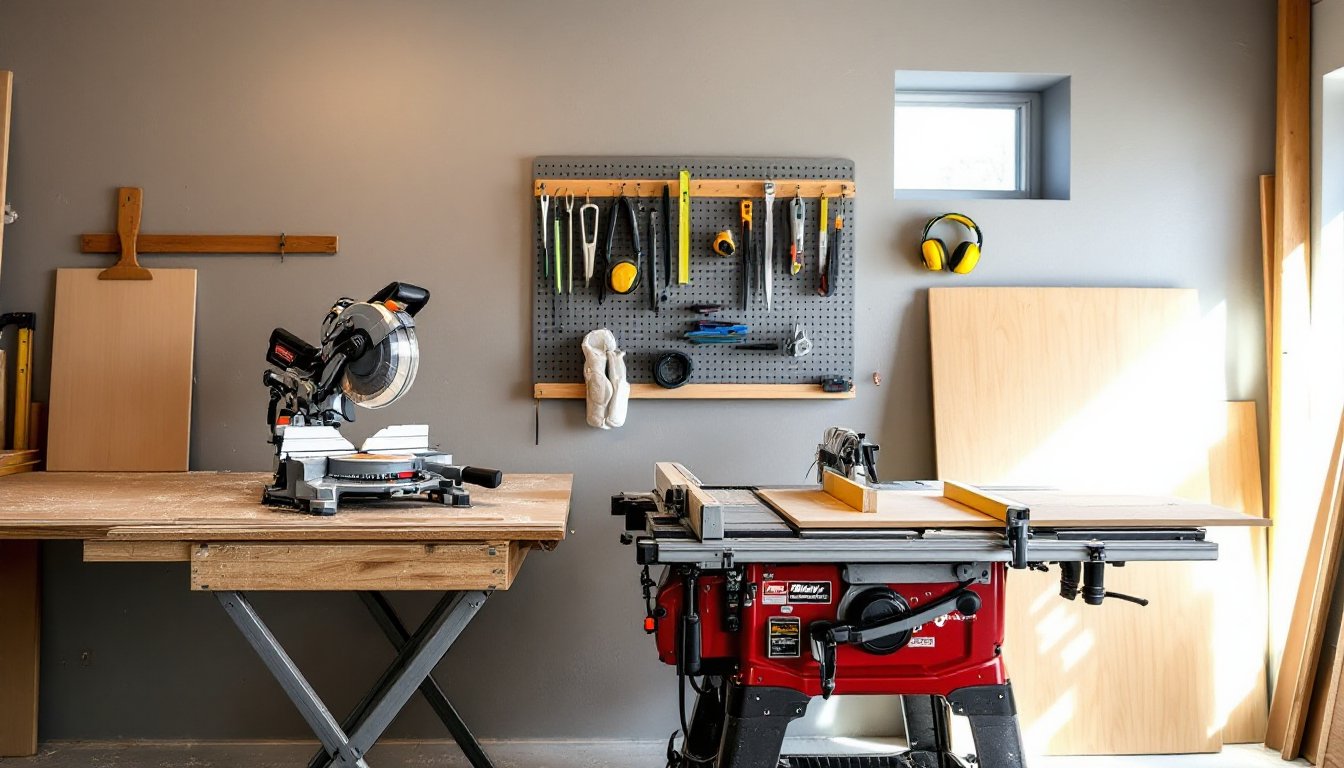
ToggleWhen stocking a home workshop, the table saw or miter saw question stops a lot of DIYers in their tracks. Both are powerful cutting tools that handle wood with precision, but they’re built for fundamentally different tasks. Trying to force one to do the other’s job leads to frustration, wasted material, and potentially unsafe workarounds. Understanding what each saw does best, and where it falls short, helps you invest in the right tool for your actual project list, not just the one that looks most impressive in the garage.
Key Takeaways
- A miter saw excels at crosscuts, miters, and trim work, making it the better choice for baseboard, crown molding, and repetitive angled cuts on long boards.
- A table saw is the essential tool for ripping sheet goods, dimensional lumber, and joinery cuts like dadoes and rabbets, critical for furniture and cabinet building.
- Miter saws are more portable and compact, requiring roughly linear workspace equal to your longest workpiece, while table saws demand significant front, rear, and side clearance for safe operation.
- The miter saw vs table saw decision depends on your actual project list: prioritize a miter saw first for trim and framing projects, then add a table saw as ambitions expand toward furniture and sheet goods.
- A budget-conscious DIYer can start with a sliding compound miter saw ($250–$500) plus a track saw for sheet breakdowns, offering versatility comparable to owning both saws separately.
- Both saws require critical safety measures—miter saws demand proper dust collection and hand positioning, while table saws necessitate push sticks, blade guards, and riving knives to prevent kickback injuries.
What Is a Miter Saw and What Is It Best For?
A miter saw is a stationary power tool with a circular blade mounted on a pivoting arm. The user positions material on the saw’s fence, pulls the blade down through the workpiece, and makes a precise crosscut. Standard miter saws pivot left and right to cut angles (miters), while compound miter saws also tilt to cut bevels. Sliding compound miter saws add forward-and-backward blade travel, extending crosscut capacity to wider boards.
Miter saws excel at repetitive crosscuts and angled cuts on long, narrow stock. Think trim carpentry: baseboard, crown molding, door casing, window trim, and picture frames. They’re also indispensable for cutting deck boards, fence pickets, and 2×4 framing to length. Because the workpiece stays flat on the saw’s base and against the fence, cuts are consistent and fast, critical when you need 40 identical pieces of quarter-round.
Most sliding compound miter saws handle stock up to 12 inches wide for crosscuts and can miter up to 50 degrees left or right, with bevel capacity around 45 degrees. Many modern models include laser guides or LED shadows to show cut lines, plus positive stops at common angles (0°, 15°, 22.5°, 31.6°, 45°). Dust collection ports help manage sawdust, though a shop vacuum attachment is essential for serious cleanup.
Safety note: Always wear safety glasses and hearing protection. Miter saws kick up fine dust, so a dust mask or respirator is smart for extended sessions. Keep hands at least six inches from the blade path, use the saw’s clamp for small pieces, and never reach around a spinning blade to clear offcuts.
What Is a Table Saw and What Is It Best For?
A table saw mounts a circular blade vertically through a flat table surface. The user pushes material through the blade along a rip fence (for rip cuts parallel to the grain) or a miter gauge (for crosscuts). The blade height and angle adjust for different cut depths and bevels. Table saws come in three main formats: portable/jobsite saws (lighter, direct-drive motors), contractor saws (larger tables, belt-drive motors), and cabinet saws (heavy-duty, enclosed motor housings).
Table saws are the workhorse for ripping sheet goods and dimensional lumber. If you’re breaking down 4×8-foot plywood sheets, resawing hardwood, or ripping a 2×10 joist down its length, a table saw does the job cleanly and safely, assuming proper technique and outfeed support. They also handle dadoes (grooves), rabbets (stepped edges), and through cuts on wider panels where a miter saw’s crosscut capacity would fall short.
A typical 10-inch jobsite table saw rips material up to 24 inches wide with the fence fully extended, and cuts up to 3 inches deep at 90 degrees. Cabinet saws offer larger tables and more powerful motors (often 3–5 HP), making them better suited for thick hardwoods and all-day use. Dado blade compatibility varies: many portable saws can’t accept a full 8-inch stacked dado set, while cabinet saws usually can.
Many woodworking project plans assume access to a table saw for ripping stock to width and cutting joinery. It’s the foundation tool for furniture building, cabinetry, and any project requiring consistent, repeatable rip cuts.
Safety note: Table saws cause more serious injuries than any other stationary power tool. Always use a push stick or push block for narrow rips (anything under six inches from the blade). Keep the blade guard and riving knife installed unless making specialty cuts that require removal, and reinstall them immediately afterward. Wear safety glasses and avoid loose clothing or gloves that can catch. Kickback, when the workpiece is violently thrown back toward the operator, is the primary hazard: proper fence alignment, a sharp blade, and attentive feeding pressure prevent most incidents.
Key Differences Between Miter Saws and Table Saws
Cut Types and Capabilities
The core difference is cut orientation. Miter saws crosscut, the blade moves down through stationary material, cutting perpendicular (or at an angle) to the board’s length. Table saws rip and crosscut, the material moves past a stationary blade, with rip cuts running parallel to the grain.
A miter saw’s crosscut capacity tops out around 12 inches (or 16 inches on high-end 12-inch sliding models). Anything wider requires a table saw or a circular saw with a guide. Conversely, ripping a 1×6 board lengthwise on a miter saw isn’t just impractical, it’s unsafe. The saw’s throat plate and blade guard aren’t designed for material fed lengthwise, and there’s no rip fence to guide the cut.
Table saws handle joinery cuts that miter saws can’t touch: dados for bookshelf shelves, rabbets for cabinet backs, box joints, and tenons. With a crosscut sled or miter gauge, a table saw can crosscut smaller workpieces, but it’s slower and less ergonomic than a miter saw for trim-length stock. For beveled cuts, both saws tilt, but a miter saw’s compound function lets you cut miters and bevels simultaneously, essential for crown molding installed flat on the saw.
Portability and Workspace Requirements
Miter saws are more compact and portable. A 12-inch sliding compound miter saw weighs 45–60 pounds and fits on a portable stand or a dedicated miter saw bench. For contractors working on job sites, that portability is non-negotiable. The saw only needs enough space for the longest workpiece to extend left and right: a 10-foot board on a miter saw with extension wings takes up about 10 feet of linear space.
Table saws demand more real estate. Even a compact jobsite saw needs clearance in front (for feeding material), behind (for outfeed), and to the right of the blade (for ripping wide panels). Ripping an 8-foot sheet of plywood requires at least 8 feet of clearance front-to-back, plus side space equal to the rip width. Many home renovation tutorials recommend at least a 10×10-foot footprint for comfortable table saw use, accounting for material handling and operator movement.
Jobsite table saws weigh 50–70 pounds with folding stands, making them semi-portable. Contractor and cabinet saws weigh 200–600 pounds and rarely move once installed. If shop space is tight, say, a single-car garage that also parks a car, a miter saw on a rolling stand offers more flexibility. You can wheel it out for a trim project, then tuck it against a wall when done.
Which Saw Should You Buy for Your Home Workshop?
Start by auditing your actual project list. If you’re installing baseboards, building a deck, framing walls, or tackling trim-heavy renovations, a miter saw is the first purchase. It’ll handle 80% of what those projects demand, and a circular saw with a straightedge covers the occasional rip cut.
If you’re building furniture, breaking down plywood for cabinets, or doing any work that involves sheet goods and dimensional lumber ripped to custom widths, the table saw is foundational. You can crosscut shorter boards with a miter gauge or sled, though it’s slower than a miter saw.
For a well-rounded DIY workshop, many builders eventually own both. The typical acquisition order is miter saw first (it’s less intimidating, more immediately useful for common home projects), then a table saw as ambitions expand. A 10-inch sliding compound miter saw runs $250–$500 for a reliable mid-range model: a jobsite table saw starts around $300–$600. Expect to spend more for features like expanded crosscut capacity, better dust collection, or higher motor power.
Budget-conscious DIYers sometimes ask if a circular saw can substitute for both. It can, but inefficiently. A circular saw with a guide cuts plywood sheets and crosscuts framing lumber, and many workshop projects rely on just that. But for repetitive precision cuts, especially miters and bevels, a dedicated miter saw saves hours and reduces error. For ripping dozens of boards to identical width, a table saw’s fence beats clamping a straightedge every time.
Pro tip: If you can only afford one saw and your project mix is varied, a sliding compound miter saw plus a track saw (a guided circular saw system) offers surprising versatility. The track saw handles sheet breakdowns and longer rip cuts: the miter saw covers crosscuts and trim. It’s not as fast as a table saw for production ripping, but it’s a functional compromise for smaller workshops.
Don’t forget the accessories that make either saw safer and more capable: quality blades (a finish blade for trim, a rip blade for table saws), outfeed support (roller stands or a table extension), dust collection hookups, and proper personal protective equipment. A $400 saw with a $15 combination blade won’t perform like a $400 saw with a $60 finish blade matched to the material.
Conclusion
The miter saw vs table saw decision isn’t about which tool is better, it’s about which one matches your work. Miter saws own crosscuts, angles, and trim: table saws dominate rip cuts, sheet goods, and joinery. Most serious DIYers end up with both, but the right first saw depends on whether you’re hanging crown molding or building a bookshelf.